Reading List
The most recent articles from a list of feeds I subscribe to.
2022 in review
With only a few days left 2022, I wanted to review some of my 2022, including speaking, reading, music, writing and travel. Let's go!
Note: like in 2021, 2020, 2019, 2018 and 2017, in this public post I mostly sum up “highlights“, stuff I liked about the year etc. Of course, life is more complex and less structured than posts like this make it out to be.
Work
From February, I started working full time at Sanity.io, we focus on making content management pleasant for everyone involved. I'm in the developer relations team, with a focus on things like documentation, starters, videos and workshops. The problems are intriguing, they are both technical (like real time multiplayer content editing) and organisational (like cross functional collaboration). I'm enjoying being in a place where I can learn a lot and contribute a lot of my experience at the same time. I feel lucky with great colleagues. Some things we released this year: Sanity Studio v3 (customisable SPA to edit content), GROQ 1.0 (language to query content) and an /accessibility page following an accessibility review of Sanity Studio.
This year I did only minimal accessibility consulting. including reviews and presentations for UWV, a Dutch governmental organisation focused on employment and unemployment, DigiD, the Dutch digital government identity and MDN/Mozilla.
I am also still involved in Open UI CG, where I try to learn and contribute: I scribe sometimes, join discussions where I can and talk about the work at events. This year, we got a lot done on <selectmenu> and popover. See my posts on customisable selects and dialogs vs popovers.
Speaking
This year had many more in person events, and I have loved speaking in person at JSConf in Budapest, EuroIA in Marseille and State of the Browser in London. Most talks were about accessibility, some about CSS, HTML and content.
In 2023 I want to talk about the nitty gritty of building popovers and the power of systems that use composability as design principle (see the Speaking page).
These are the talks I did in 2022:
- The Next Web on why that's not “Web3” for SendCloud (remote)
- A toolkit for web accessibility on the “toolkit” edition of Beyond Tellerrand's Stay Curious event (where Stephanie presented her awesome toolkit for CSS) (remote)
- It's the markup that matters at JSConf Budapest and Modern Front-ends Live
- Shifting left, or: making accessibility easier by doing it earlier at DevOps Amsterdam (remote), the Sanity July meetup (remote) and State of the Browser
- Editor experiences that your team will love, a workshop, at React India (remote) and React Summit Amsterdam (remote)
- More to give than just the div: semantics and how to get them right at Frontmania
- Your CMS is an accessibility assistant at IAAP-EU (remote)
- Cross-functional collaboration for structured content, a workshop at EuroIA and Structured Content Conference, developed by my colleague Carrie Hane, co-facilitated by my colleague Simeon Griggs
- Styling selects? You've got options!, a lightning talk at CSS Day + CSS Café
Reading
In total, I read about 30 books this year, still a mix of physical, ebooks and audiobooks.
On technology, I loved Blockchain chicken farm by Xiaowei Wang. “Hustle culture” isn't just a Silicon Valley thing, it's there in rural China. From “e-commerce villages” that solely focus on producing for Taobao to free range chicken on the blockchain (of course it added no value). Awesome mix of technology, travels, encounters, food and how the world and life works from an original thinker. Original thinking was also in Ways of being by James Bridle, about artificial intelligence, ecology and the relationship between the humans and the ‘more than human’ world. He critiques the idea that the world, all of the world, can be computed and represented in data points. He shows why that would be a limited way of thinking. It's a little vague sometimes, according to Cory Doctorow that's because the book argues against crisp articulations themselves.
Two books I liked about identity and cultures were Takeaway and If I surivive you. Takeaway by Angela Hui is about what it's like to grow up in rural Wales when your parents run a takeaway. Often entertaining, often touching tale of family relationships, finding identy and racial abuse. Food is a central theme too, the recipe each chapter ends with was a nice touch. I found If I survive you, by James Escoffery, a very well written collection of short stories about a Jamaican family in America, about existing between two cultures, capitalism and being black in America.
I also thoroughly enjoyed Erasmus: dwarsdenker a biography of the philosopher/theologician Erasmus (in Dutch). Didn't know Erasmus spent lots of time begging patrons to fund him, so that he could write, travelled a lot (UK, Germany, Belgium and France, by horse and ship), got ‘jobs’ in the church that came with a livelong salary without requiring him to actually do the job (this was a thing at the time, Erasmus had his in Aldington, UK and Kortrijk, Belgium) and Erasmus had criticasters who published their criticisms anonymously and circulated lists of criticisms on his New Testament, mixed with gossip about his life and history. Glad we don't do any of that anymore. Oh wait…
Music
This year I listened a lot to:
- Kendrick Lamar's new album Mr Morale and the Big Steppers, which was my first introduction to his music and got me ready to explore all the earlier albums that everyone had been raving about. A colleague recommended the Dissect podcast, which explains To Pimp a Butterfly track by track in hour long episodes.
- Nubya Garcia's Source remix album: saw her live in Rotterdam and have had her Tiny Desk and BBC Proms (posted last month) gigs on repeat
- WIES, Froukje, Joost Klein and Hang Youth: there has been a resurge in Dutch artists performing in Dutch (English has been more common), loved the Bandje pun on the Dutch Prime Minister's dismissive attitude towards the performing arts and ‘Met je Ako ideologie’ on getting one's world view from the train station's best selling non fiction (not making this up)
- Robert Glasper's Black Radio 3 was my favourite album, where jazz and hiphop meet. Beautiful spoken word on a Radiohead-esque melody in the opening track and lots of collaborations with people like Esparanza Spalding and A Tribe Called Quest's Q-Tip (on one track) throughout.
Writing
I finally added some more useful categories to this blog, moved to a veey short domain (it's just hidde.blog) and published about 30 posts this year. I'm most happy with:
- Dialogs, modals and popovers seem different: how are they different: a deep dive into these common patterns, with many thanks to Adrian Roselli and Scott O'Hara for their review help
- “That's not accessible!” and other statements about accessibility
- ATAG: the standard for the accessibility of content creation, I learned a lot about ATAG while I was at W3C and this was my personal plain language version
- The web doesn't have version numbers, the industry continued to surprise me with its dreams of making everything about money and ‘on’ an inefficient database (I'm also feel the ‘metaverse’ is a non-sensical investment)
Cities
San Francisco, Budapest, Düsseldorf, Cologne, Oslo, Paris, Marseille, London (5 times), Brighton, Antwerp, Lille, various towns in Normandy and Taipei.
It's especially been nice to meet international internet friends in person, many for the first time, like Nicole, Tantek, Yulia, Vadim, HJ, Adam, Una, Gift, Adrian, Manjula, Ana, Jeremy, Michelle, Mu-An, Bruce, Andy, Sophie, Léonie, Anuradha, Jhey and Patrick. Plus almost all of my colleagues.
Conclusion
That's all for this year, thanks all for reading my posts, liking subcribing, disagreeing via email, everything! If you've posted a year in review, let me know, I'd love to read it!
Originally posted as 2022 in review on Hidde's blog.
ChatGPT will not replace programmers, but Search Engines should be worried
The (very) short story of “Ideasoft”
Hello world!
New zine: The Pocket Guide to Debugging
Hello! On Monday, we released a new zine: The Pocket Guide to Debugging! It has 47 of my favourite strategies for solving your sneakiest bugs.
You can get it for $12 here: https://wizardzines.com/zines/debugging-guide, or get an 12-pack of all my zines here.
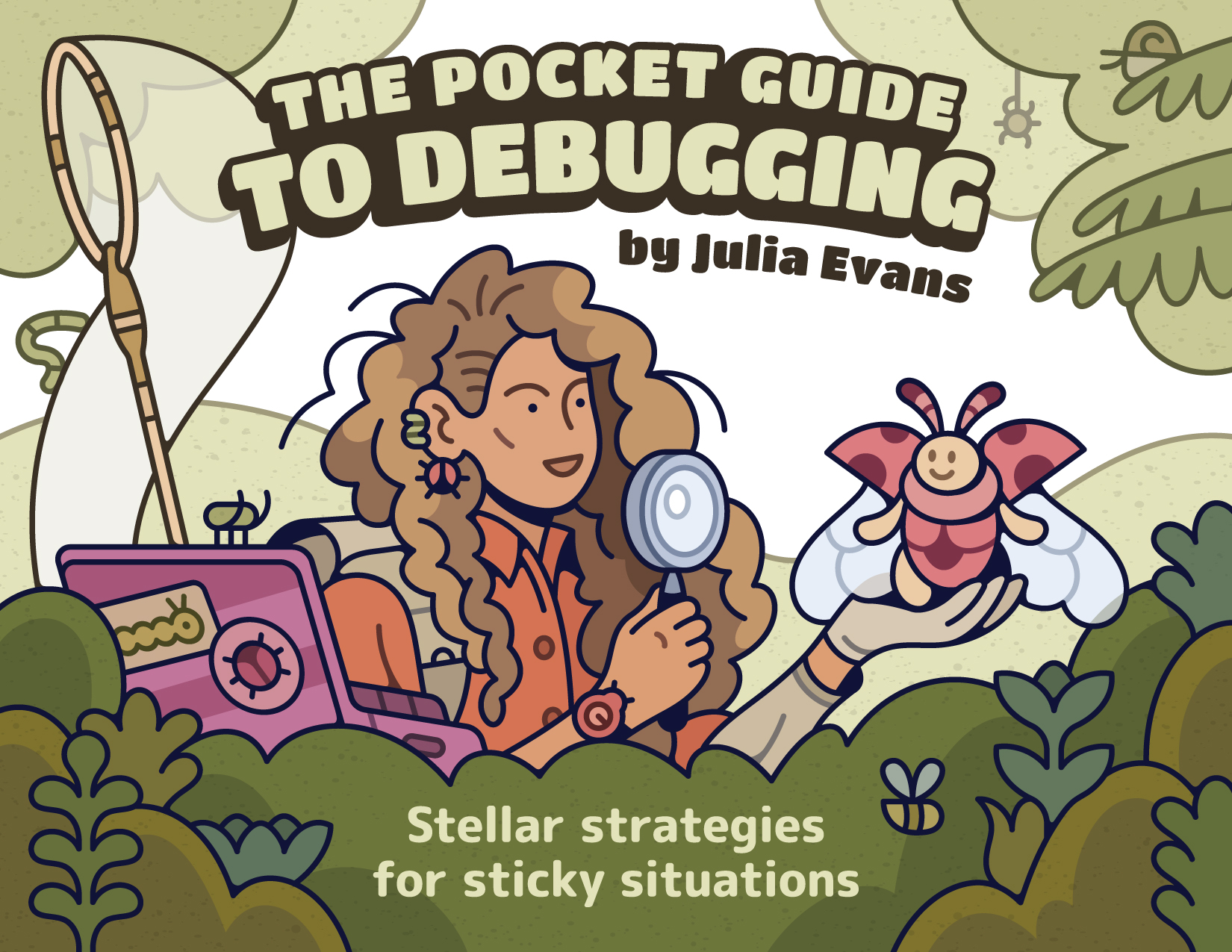
Here’s the cover:
the table of contents
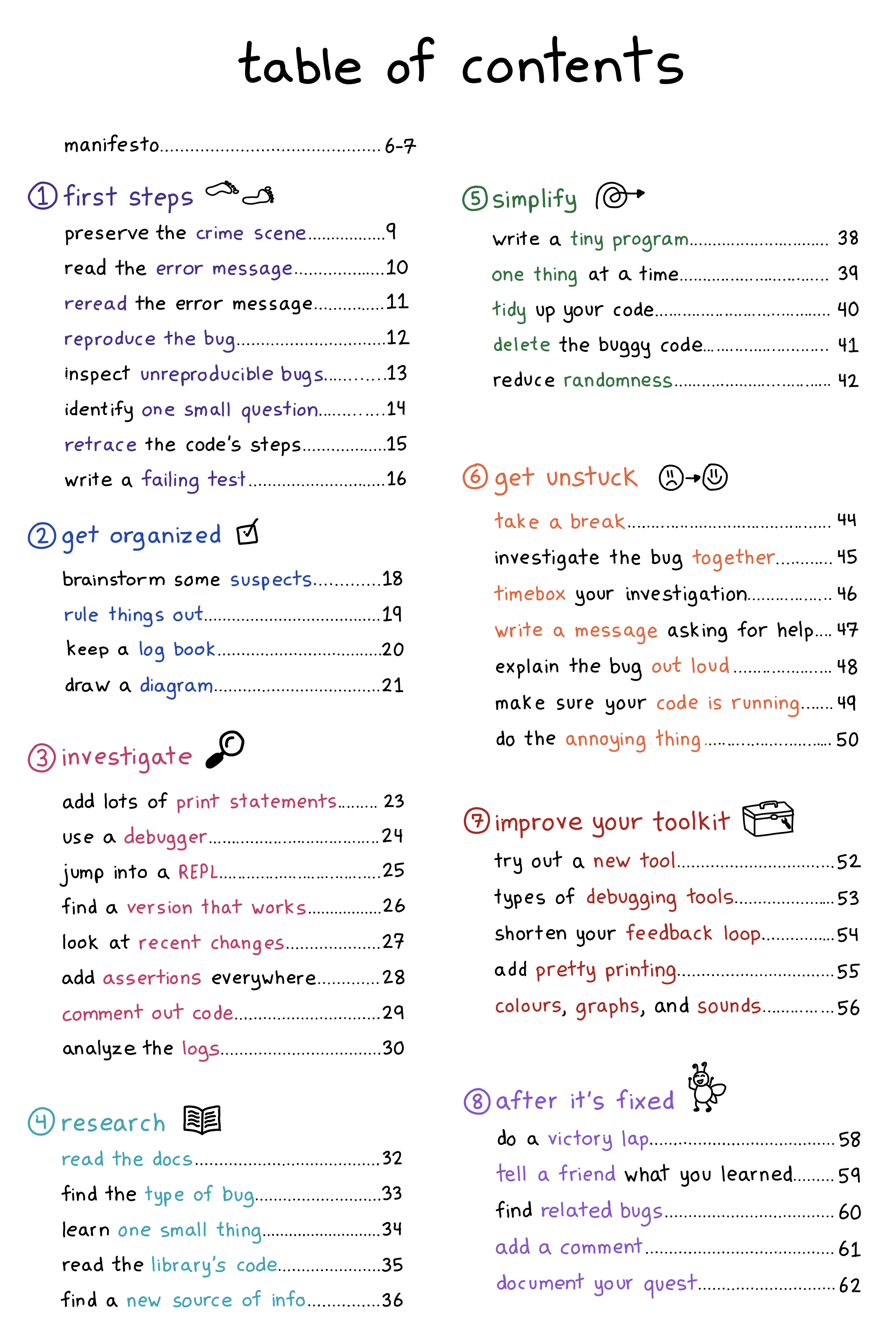
Here’s the table of contents!
A few people mentioned that they were printing it out, so I made a PDF poster version if you want to print it:
I love that the table of contents is already kind of useful as a collection of strategies on its own.
why debugging?
I wrote this zine because debugging is a huge part of how we spend our time as programmers, but nobody teaches us how to do it! If you’re lucky, you get to pair program with someone who’s good at debugging and explaining their thought processes, and they can show you. But not all of us have that person, so we end up just struggling through it ourselves and learning strategies the hard way.
So I wanted to write a zine where beginners can learn some of these strategies the easy way, and which more experienced programmers can use as a reference to get ideas when you’re in the middle of a tricky bug.
it comes with some debugging mysteries!
This zine comes with a few choose-your-own-adventure debugging mysteries (like “The Case of the Connection Timeout”), at https://mysteries.wizardzines.com.
These mysteries show you how to apply some of the tricks in the zine to a specific kind of bug: computer networking issues! It also demos some of my favourite networking spy tools – it’ll show you some tips for interpreting their output.
You can read some notes on designing those puzzles here: Notes on building debugging puzzles. (You might notice that post is from a year and half – that’s because I’ve been trying to write this zine on and off for 3 and a half years and a lot of things happened along the way :))
it’s actually been helping me debug!
I’ve actually been shocked by how useful this zine has been for helping me debug – after all, I know all these strategies! I like to think I’m pretty good at debugging!
But when I’m in the middle of a tricky bug and I’m frustrated, I’ve actually been finding it incredibly helpful to reach for the table of contents and get an idea for something to try.
It’s also been fun to reflect on what strategies I’m using when debugging. For example, yesterday I had a CSS bug, and I was super frustrated. But it turned that I just needed to:
- come up with one small question
- write a tiny program
- start writing a message asking for help
- quickly read the docs
- delete the message I started writing without sending it, since I’d figured it out :)
some blog posts I wrote along the way
Here are a few blog posts I wrote while thinking about how to write this zine:
- a debugging manifesto
- some ways to get better at debugging
- reasons why bugs might feel “impossible”
- when debugging, your attitude matters
- what does debugging a program look like?
you can get a print copy shipped to you!
There’s always been the option to print the zines yourself on your home printer.
But this time there’s a new option too: you can get a print copy shipped to you! (just click on the “print version” link on this page)
The only caveat is print orders will ship around the end of January – I need to wait for orders to come in to get an idea of how many I should print before sending it to the printer.
the home printing directions are a little bit different!
This zine is twice the length of other zines, but half the height! This makes it extremely pocket sized, and it means you have to cut the print version in half. But don’t worry – there’s a dotted line and a video :)
The video with the print directions is at https://wizardzines.com/print/
the hardest part of writing this zine: making it specific
It’s relatively easy to give high-level debugging advice. Reproduce the bug! Be rigorous! Try to divide the problem space in half! Print stuff out! And this zine started out as pretty general high-level advice. (you can read a old table of contents here from an earlier draft)
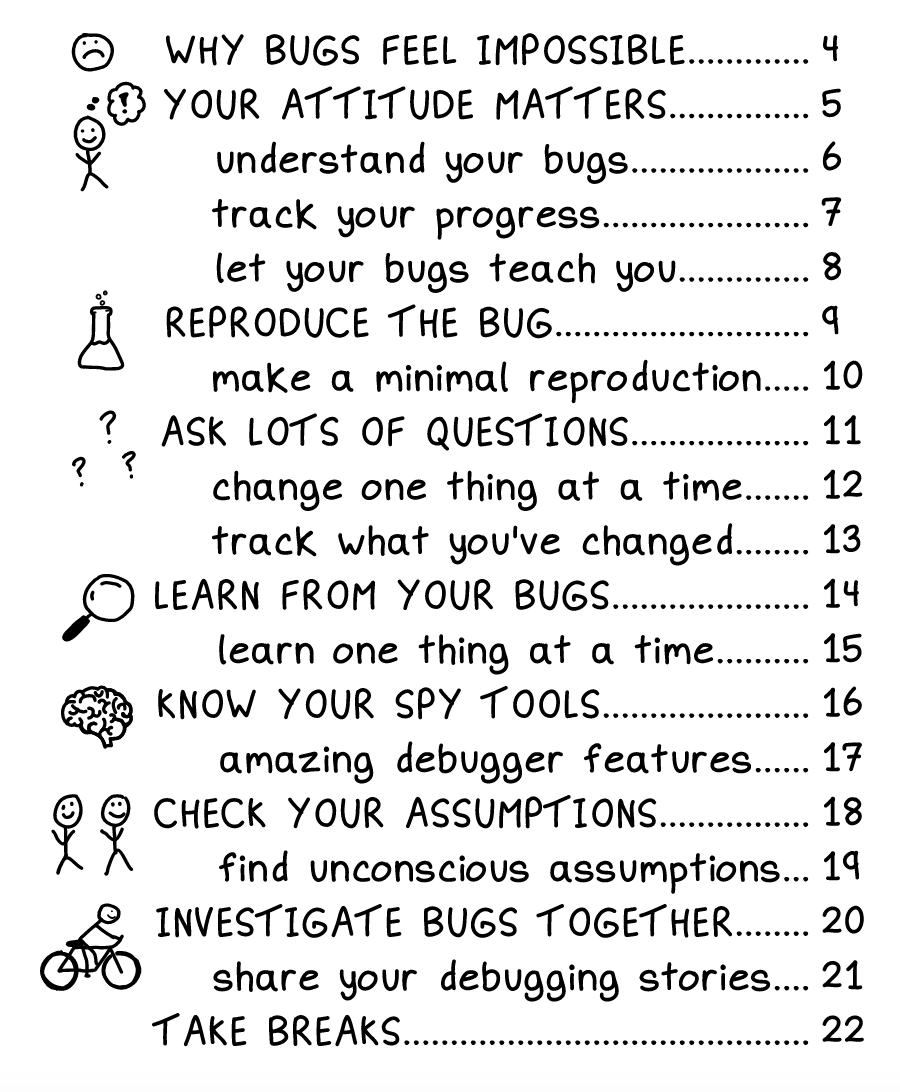
Turning those high-level guidelines into specific things that you can actually do was a lot harder. I sat down with my amazing friend Marie Claire LeBlanc Flanagan every weekday at 10am for 6 months, and every day we made the zine a little more specific and concrete and useful.
I’m really proud of how it turned out.
beta readers are amazing
Also, I want to thank the beta readers – 40 of you read the zine and left comments about what was confusing, what was working, and ideas for how to make it better. It made the end product so much better.
thank you
As always: if you’ve bought zines in the past, thank you for all your support over the years. I couldn’t do this without you. Happy holidays.