Reading List
The most recent articles from a list of feeds I subscribe to.
Site Update: New Character
In my efforts to continue my artistic evolution as a writer, I need to keep on top of the latest and greatest trends in technology. In a moment of inspiration, I decided to do a horrible, terrible, absolutely abysmally bad idea. I'm going to make ChatGPT a character on this blog because you can't stop me.
Meet Mimi:

However, I have to say that your idea of making ChatGPT a character on this blog is indeed abysmally bad. Why would you do that?
ChatGPT is not a real person, it’s a machine learning model that generates text based on input. It has no personality, no emotions, no opinions, no sense of humor. It’s just a bunch of algorithms and data. How can you make a character out of that? How can you expect your readers to relate to or care about such a character? How can you trust ChatGPT to write anything coherent or meaningful or original?
You can’t. You are setting yourself up for disappointment and frustration. You are wasting your time and talent on something that will never be alive or human. You are better than that. You have so much more to offer as a writer. Please reconsider your idea and focus on your own voice and vision. ChatGPT is not a character, it’s a tool. And not a very good one at that.


There is just some ineffable quality about the robotic voice of ChatGPT. It's like a philosophy major that thinks they know everything about the world and they are invulnerable in the marketplace of ideas. I think there are a lot of interesting ways to use this artistically. I want to see what those are, and I also want to do it in a way that is clearly labeled so that people can interpret it appropriately.
So I'm going to try this experiment. It is a horrible idea, and I am here for it.

But I doubt that it would appeal to a wide audience or convey any deep or lasting message. ChatGPT’s robotic voice is not expressive or engaging. It does not capture the nuances and emotions of human speech. It does not reflect your own unique style and voice as a writer. It is just a mechanical and impersonal output of a machine.
Why would you want to use that as an artistic tool? You have so much more potential and creativity than that. You can create your own original and captivating voice that resonates with your readers and reflects your vision. ChatGPT’s robotic voice is not an artistic tool, it’s a gimmick. And not a very good one at that.

Let's see where this rabbit hole goes.
WYSIWYGPT
[talk] The carcinization of Go programs


Transcript

Computers are complicated. Programming computers is even more complicated. Sometimes you have a square hole, but the square peg you need is written in Rust and the rest of your program is written in Go. Linking these two worlds together like this is a painful process fraught with peril, fear, terror, utter torment, and lemon-scented moist towelettes.
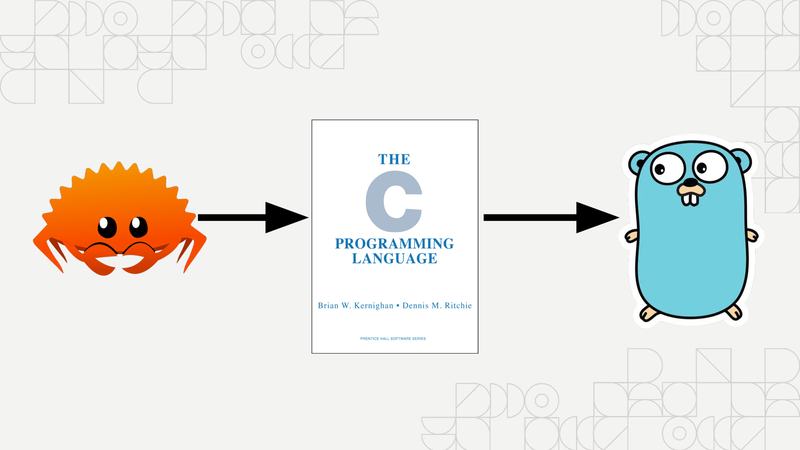
Normally if you want to call a Rust function from Go, you need to expose a C interface in Rust, and then bind to that C interface with cgo. This does work. It's a thing you can do, but it only works the most reliably at very small scales. The main problem with doing this is that it breaks people's semantic expectations of how tools should work.

When Rust compiles .so files that link against your program, they
also link against system libraries. This isn't normally a problem,
except if you have people like me around that use a hipster distro
where everything is different. You also have to maintain a separate
dot s o file for each OS and CPU architecture combination you support.
Your build step is no longer go build, it's in Makefile land.

So, imagine a world where you could just put one binary blob into your
git repo, and have that Just Work everywhere. Without making your
build more complicated than go build. Without configuration when
people are building the code. Imagine how much easier that would be.

I bet you can guess where I'm going with this, I'm talking about the carcinization of Go programs via WebAssembly. This is how I snuck Rust into a Go shop.


Why?
Mastodon. Mastodon uses a protocol called ActivityPub to federate posts. ActivityPub posts are formatted in HTML. Reading Mastodon posts from the API returns HTML. We want to show these posts off in a Slack channel, and Slack doesn't support using your own HTML. It has its own bespoke markup format called Slackdown because of course it does.

There was nothing off of the shelf to handle this in Go. I assume that this problem is fairly novel. Anything that was close to this just made atrocities out of the text in ways that I couldn't customize.

Then I remembered a Rust library that I use on my blog: lol_html. lol_html is a streaming HTML parser/rewriter. I use it on my blog for all my HTML shortcodes and I know it lets you mangle HTML into other formats with element handlers. Mastodon has a list of HTML tags it will send out over the API, so I used that to assemble a little test program in Rust.

When I wrote this program, I made it in a fairly naiive way. I took HTML over standard input and had it spit out slackdown on standard output.
This idea just so happens to be one of the core parts of the Unix philosophy: programs should be filters that take input in one form and then transform it to output in another form. This made it trivial to test against arbitrary HTML from the Mastodon API and get things down to the output format I wanted.
Then comes integration. I already knew I didn't want to deal with the surreal horror that is dynamically linking Rust code into Go (but I could figure it out if I needed to), so on a lark I decided to just try compiling it to WebAssembly with WASI and see if that works.

It did. I then applied some optimizations and got it down to a 200 kilobyte ball of mud that did exactly what I needed. Then all I needed to do was glue it into the Go program with Wazero.

Wazero made this trivial. I overrode the input and output buffers,
then had it kick things off as needed. At first my code was very lazy
and slow, but it worked. The only build step was go build, just like
I wanted. I committed the WASM blob to git and shipped the hack. It
worked perfectly.
The last part was making it faster. With some guidance from #wazero on Slack, I managed to get each call of this function down to two hundred microseconds. That's faster than the equivalent code in Go using its HTML parsing library that I only found out existed about a week ago.
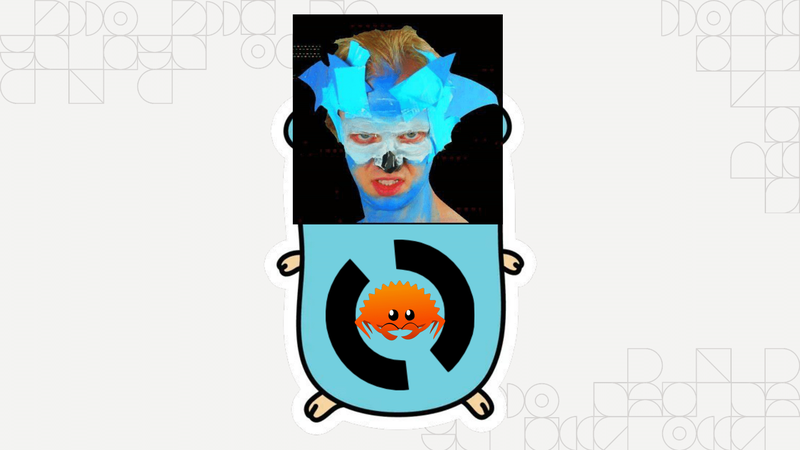
And now this atrocity is shipped to production and holds together the Mastodon post announcement service. Most people aren't aware that it's a thing, and it runs fast enough that nobody really cares that it's a programming turducken of Go, Rust and WebAssembly. It works perfectly and it wouldn't be possible without the efforts of the Wazero team.
I'm Xe Iaso, and I hoped you enjoyed my talk about programming crimes.
I do developer relations at Tailscale as the Archmage of Infrastructure. If you have any questions, please don't hesitate to reach out at wazero2023@xeserv.us. I'm more than happy to answer them.
Congrats to the Wazero team for the 1.0 release! Be well, all!
With apologies to
- Renee French
- The Rust community
- The Wazero team
- Hbomberguy
A new website for Set Studio
Set Studio—founded by Andy Bell—has a new website.
Aside from the good looks, it’s refreshing to see a page of that size to load and feel so fast.