Reading List
The most recent articles from a list of feeds I subscribe to.
Michael Bierut Told Us What He Really Thinks of ITC Garamond
Michael Bierut, “I Hate ITC Garamond”, for Design Observer back in 2004:
ITC Garamond was designed in 1975 by Tony Stan for the International Typeface Corporation. Okay, let’s stop right there. I’ll admit it: the single phrase “designed in 1975 by Tony Stan” conjures up a entire world for me, a world of leisure suits, harvest gold refrigerators, and “Fly, Robin, Fly” by Silver Convention on the eight-track. A world where font designers were called “Tony” instead of “Tobias” or “Zuzana.” Is that the trouble with ITC Garamond? That it’s dated?
Maybe. Typefaces seem to live in the world differently than other designed objects. Take architecture, for example. As Paul Goldberger writes in his new book on the rebuilding of lower Manhattan, Up From Zero, “There are many phases to the relationships we have with buildings, and almost invariably they come around to acceptance.” Typefaces, on the other hand, seem to work the other way: they are enthusiastically embraced on arrival, and then they wear out their welcome. Yet there are fonts from the disco era that have been successively revived by new generations. Think of Pump, Aachen, or even Tony Stan’s own American Typewriter. But not ITC Garamond.
The most distinctive element of the typeface is its enormous lower-case x-height. In theory this improves its legibility, but only in the same way that dog poop’s creamy consistency in theory should make it more edible.
I can’t explain how it is that I’ve never linked to this piece before.
Condensed Serif Typefaces, à la Apple Garamond, Are Back in Vogue
Katie Deighton, reporting last month for The Wall Street Journal:
Henry Modisett wanted his employer to stand out. Competitors of the artificial-intelligence firm Perplexity were embracing their science-fiction roots with futuristic branding that felt cold to him. So Modisett, the firm’s vice president of design, looked to the past.
He plowed through graphic-design books and tomes of logos featuring obscure examples like Hungarian oil companies from the ’80s. But he kept coming back to a slender, bookish typeface famously used in Apple’s “Think Different” campaign. Modisett in 2023 began slipping a cousin of the font into Perplexity’s software and marketing materials.
“It felt fresh,” he said.
Not anymore.
Apple’s custom variant of ITC Garamond was called, appropriately enough, Apple Garamond. Apple adopted it in 1984 with the introduction of the Macintosh, and continued using it through the early years of the Aqua/iMac aesthetic. For me it evokes the pinnacle of the six-color era. For Apple’s brand identity and marketing materials, after Apple Garamond came Myriad — which Apple commissioned custom variants of from Adobe. And then Myriad was succeeded by San Francisco, which I suspect still has many years ahead of it. For the last 40 years Apple has only gone through three identity fonts: Garamond → Myriad → San Francisco.
That this style of font is back in vogue is fun. It’s a good look. Friendly. Serious but not staid. The typeface a lot of these brands are using for this today is Instrument Serif, which I don’t love. It’s not bad. But it’s not great. Apple Garamond was great.
(ITC Garamond — but not condensed — served, distinctively, as both the display and body text typeface for O’Reilly books in their heyday. That typeface doesn’t look or feel Apple-like at all, nor does Apple Garamond look or feel O’Reilly-like at all.)
GCDB’s Guide to Gift Card Tampering Scams
Gift Card Database (GCDB) has a guide to spotting tampered gift cards:
Whilst it may seem unusual, you should tear open this version of Apple gift card before you purchase it so that you can inspect the redemption code. Look for missing or scratched off characters (it may be as subtle as changing an L to look like an I).
If you’re satisfied that the redemption code is legible and undamaged, you can purchase the gift card by scanning the barcode on the other side. If staff question your decision to open it first, calmly explain why you were checking it and refer them to the image above if it helps.
The one major downside of this precaution is that it requires you to basically destroy the gift card packaging so if it’s intended as a present you may just have to give them the smaller inner card instead. Still, it’s better to be safe than sorry.
I’m not bashful, but I’d be very uncomfortable opening gift cards before I purchased them. The whole point of this is that gift card scams are on the rise. If I saw someone opening gift cards in-store before purchasing them, I’d think they were shameless scammers. If you need to destroy the retail packaging for a gift card to feel certain it hasn’t been tampered with, the whole system seems fundamentally broken. (And just eyeballing the redemption code doesn’t prove it hasn’t been tampered with.)
Are Apple Gift Cards Safe to Redeem?
You will recall the Apple Account fiasco of Paris Buttfield-Addison, whose entire iCloud account and library of iTunes and App Store media purchases were lost when his Apple Account was locked, seemingly after he attempted to redeem a tampered $500 Apple Gift Card that he purchased from a major retailer. I wrote about it, as did Michael Tsai, Nick Heer, Malcom Owen at AppleInsider, and Brandon Vigliarolo at The Register. Buttfield-Addison has updated his post a few times, including a note that Executive Relations — Apple’s top-tier support SWAT team — was looking into the matter. To no avail, at least yet, alas.
Adam Engst, writing at TidBITS today:
There is one way the Apple community could exert some leverage over Apple. Since innocently redeeming a compromised Apple Gift Card can have serious negative consequences, we should all avoid buying Apple Gift Cards and spread the word as widely as possible that they could essentially be malware. Sure, most Apple Gift Cards are probably safe, but do you really want to be the person who gives a close friend or beloved grandchild a compromised card that locks their Apple Account? And if someone gives you one, would you risk redeeming it? It’s digital Russian roulette.
I suspect that one part of Buttfield-Addison’s fiasco is the fact that his seemingly problematic gift card was for $500, not a typical amount like $25, but that’s just a suspicion on my part. We don’t know — because key to the Kafka-esque nature of the whole nightmare is that his account cancellation was a black box. Not only has Apple not yet restored his deactivated Apple Account, at no point in the process have they explained why it was deactivated in the first place. We’re left to guess that it was related to the tampered gift card and that the relatively high value of the card in question was related. $500 is a higher value than average for an Apple gift card, but that amount is less than the average price for a single iPhone. Apple itself sets a limit of $2,000 on gift cards in the US, so $500 shouldn’t be considered an inherently suspicious amount.
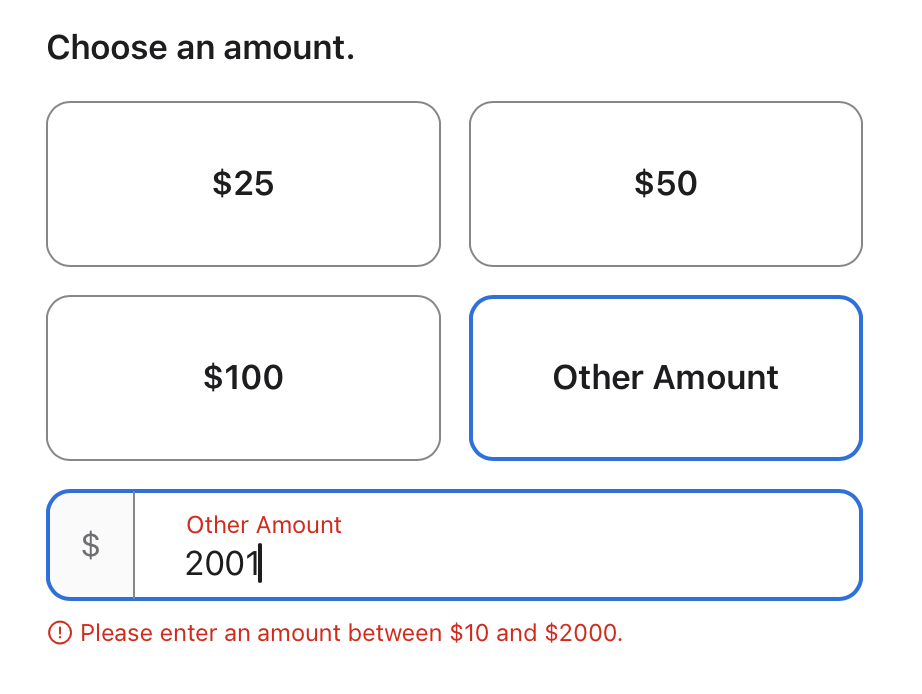
The whole thing does make me nervous about redeeming, or giving, Apple gift cards. Scams in general seem to be getting more sophisticated. Buttfield-Addison says he bought the card directly from “a major brick-and-mortar retailer (Australians, think Woolworths scale; Americans, think Walmart scale)”. Until we get some clarity on this I feel like I’d only redeem Apple gift cards at an Apple retail store, for purchases not tied to my Apple Accounts. (I’ve still got two — one for iCloud, one for media purchases.)
In addition to the uncertainty this leaves us with regarding the redemption of Apple gift cards, I have to wonder what the hell happens to these Apple Accounts that are deactivated for suspected fraud. You would think that once escalated high enough in Apple’s customer support system, someone at Apple could just flip a switch and re-activate the account. The fact that Buttfield-Addison’s account has not yet been restored, despite the publicity and apparent escalation to Executive Relations, makes me think it can’t be restored. I don’t know how that can be, but it sure seems like that’s the case. Darth Vader’s “And no disintegrations” admonition ought to be in effect for something like this. I have the sinking feeling that the best Apple is able to do is something seemingly ridiculous, like refund Buttfield-Addison for every purchase he ever made on the account and tell him to start over with a new one.
My other question: Were any humans involved in the decision to deactivate (disintegrate?) his account, or was it determined purely by some sort of fraud detection algorithm?
Update: Very shortly after I posted the above, Buttfield-Addison posted an update that his account was successfully restored by the ninja on Apple’s Executive Relations team assigned to his case. That’s great. But that still leaves the question of how safe Apple gift cards are to redeem on one’s Apple Account. It also leaves the question of how this happened in the first place, and why it took the better part of a week to resolve.
The Story Behind Windows 3.1’s ‘Hot Dog Stand’ UI Color Scheme (Which Isn’t Much of a Story at All)
Wes Fenlon, writing for PC Gamer:
Did Windows 3.1 really ship with a garish color scheme that was dared into being? That was a story I needed to hear, so I went digging for the credits of the Microsoft employees who worked on the user interface back then and found my way to Virginia Howlett, who joined Microsoft in 1985 as the company’s first interface designer, and worked there up through the launch of Windows 95.
Howlett:
I have been mystified about why that particular theme causes so much comment in the media. Maybe it’s partly the catchy name. (Never underestimate the power of a good brand name!)
I do remember some discussion about whether we should include it, and some snarky laughter. But it was not intended as a joke. It was not inspired by any hot dog stands, and it was not included as an example of a bad interface — although it was one. It was just a garish choice, in case somebody out there liked ugly bright red and yellow.
The ‘Fluorescent’ theme was also pretty ugly, but it didn’t have a catchy name, so I’ve never heard anything about it.
I remember this color theme, because I had to use Windows 3.1 at a few jobs in the 1990s, and anyone who used it remembers “Hot Dog Stand”. Howlett’s explanation is exactly what I always thought. It wasn’t for accessibility. It wasn’t a dare or a joke. It was something they knew was ugly and they shipped it anyway in case people wanted an ugly UI.
That’s Microsoft.