Reading List
The most recent articles from a list of feeds I subscribe to.
Do we need a European DARPA to cope with technological challenges in Europe?

The US Defense Advanced Research Projects Agency (DARPA) is often held as a model for driving technology advances. For decades, it has contributed to military and economic dominance by bridging the gap between military and civilian applications. European policymakers frequently reference DARPA in discussions, as outlined in the 2024 Draghi Report, but an EU equivalent has yet to materialise. To create such an agency, the governance and management of European innovation programmes would need drastic changes. DARPA supports disruptive innovation Founded in 1958, DARPA operates under the US Department of Defense (DoD) with a straightforward mission: to fund high-risk technological…
This story continues at The Next Web
EU funding powers 10% of European startup ecosystem, study finds
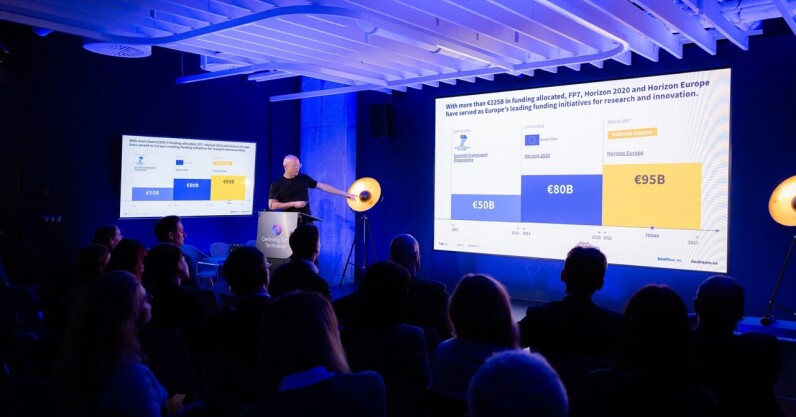
About one in every 10 European startups that have raised VC investment are also backed by an EU grant of equity financing, according to a research project conducted by Dealroom and Dealflow.eu. While the full report is expected to be published later this year, the authors presented a few preliminary numbers in Warsaw last week. In financial terms, the 10% share translates into EU-backed startups having raised €70bn in VC funding since 2010, or some 11% of total funding in Europe (which in this case includes the EU, Switzerland, Norway, UK, and Israel). With some €400bn in total enterprise value…
This story continues at The Next Web
How wasted heat from our bodies could generate green energy

If you’ve ever seen yourself through a thermal imaging camera, you’ll know that your body produces lots of heat. This is in fact a waste product of our metabolism. Every square foot of the human body gives off heat equivalent to about 19 matches per hour. Unfortunately, much of this heat simply escapes into the atmosphere. Wouldn’t it be great if we could harness it to produce energy? My research has shown this would indeed be possible. My colleagues and I are discovering ways of capturing and storing body heat for energy generation, using eco-friendly materials. The goal is to…
This story continues at The Next Web
Apophis: a European space mission gets up close with an asteroid set to brush by Earth

The European Space Agency has given the go-ahead for initial work on a mission to visit an asteroid called (99942) Apophis. If approved at a key meeting next year, the robotic spacecraft, known as the Rapid Apophis Mission for Space Safety (Ramses), will rendezvous with the asteroid in February 2029. Apophis is 340 metres wide, about the same as the height of the Empire State Building. If it were to hit Earth, it would cause wholesale destruction hundreds of miles from its impact site. The energy released would equal that of tens or hundreds of nuclear weapons, depending on the…
This story continues at The Next Web
Apple Intelligence will help AI become as commonplace as word processing

When Apple’s version of AI, branded as Apple Intelligence, rolls out in October to folks with the company’s latest hardware, the response is likely to be a mix of delight and disappointment. The AI capabilities on their way to Apple’s walled-garden will bring helpful new features, such as textual summaries in email, Messages and Safari; image creation; and a more context-aware version of Siri. But as Apple Intelligence’s beta testing has already made clear, the power of these features falls well below what is on offer from major players like OpenAI, Google, and Meta. Apple AI won’t come close to…
This story continues at The Next Web
Or just read more coverage about: Apple