Reading List
The most recent articles from a list of feeds I subscribe to.
AI battery brain promises to jumpstart European EVs
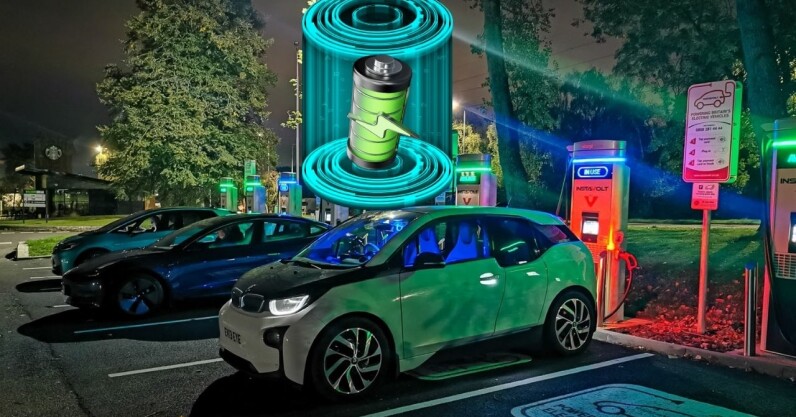
A German startup plans to jumpstart European EVs with an AI-powered brain. Sphere Energy built the system to simulate battery behaviour. The company then predicts a power source’s lifetime in numerous scenarios, from driving styles to temperatures on the road. According to Sphere, the insights shrink the battery testing cycle by at least a year. Developing a car, meanwhile, could be completed “at least” twice as quickly. Sphere envisions endless benefits: manufacturers will save millions, car prices will plummet, and innovations will increase at exponential rates. The startup’s co-founder, Lukas Lutz, said the plans are unprecedented. “Nobody right now —…
This story continues at The Next Web
Knowing less about AI makes people more open to having it in their lives

The rapid spread of artificial intelligence has people wondering: who’s most likely to embrace AI in their daily lives? Many assume it’s the tech-savvy — those who understand how AI works — who are most eager to adopt it. Surprisingly, our new research (published in the Journal of Marketing) finds the opposite. People with less knowledge about AI are actually more open to using the technology. We call this difference in adoption propensity the “lower literacy-higher receptivity” link. This link shows up across different groups, settings, and even countries. For instance, our analysis of data from market research company Ipsos…
This story continues at The Next Web
We’re getting closer to having practical quantum computers – here’s what they will be used for

In 1981, American physicist and Nobel Laureate, Richard Feynman, gave a lecture at the Massachusetts Institute of Technology (MIT) near Boston, in which he outlined a revolutionary idea. Feynman suggested that the strange physics of quantum mechanics could be used to perform calculations. The field of quantum computing was born. In the 40-plus years since, it has become an intensive area of research in computer science. Despite years of frantic development, physicists have not yet built practical quantum computers that are well suited for everyday use and normal conditions (for example, many quantum computers operate at very low temperatures). Questions…
This story continues at The Next Web
The developer of SerenityOS is building a challenger to the browser duopoly

There are a handful of challenges that many developers like to tackle as something of a rite of passage to prove their coding worth. One is creating a compiler. That fundamental building block of many programming languages translates the more human-understandable code into something a computer understands. Another and far more ambitious challenge is building an operating system. The scope is almost limitless. You could create a Linux distribution, which often requires less coding, but more assembling of pre-existing packages and dependencies. You could create a command line operating system that works on limited hardware or on a low-level machine.…
This story continues at The Next Web
ASML rebounds from DeepSeek hit, expects AI advance to boost demand for chips
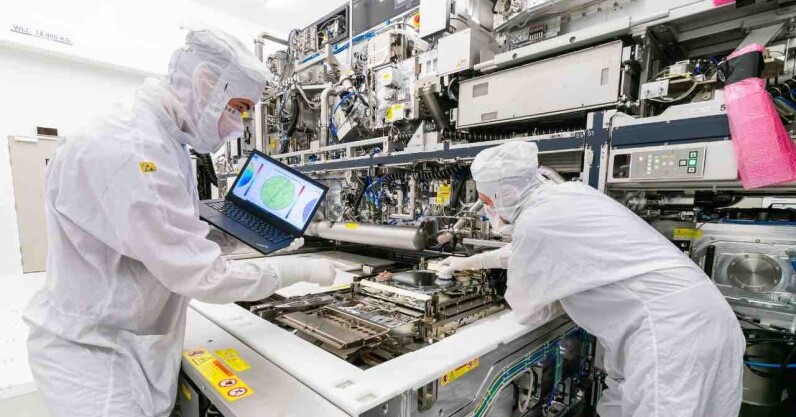
Shares in ASML have bounced back from the hit inflicted by DeepSeek’s AI advances. Celebrating the results, ASML predicted that the sudden emergence of low-cost models will boost demand for the firm’s semiconductor machines. The company’s stock price rose by over 10% on Wednesday after the Dutch business reported impressive orders for its chip-making equipment. The tools produce the most advanced semiconductors in the world — and ASML is the only company that manufactures them. This dominant position has made ASML the second most valuable tech firm in Europe. But the business was shaken on Monday by DeepSeek’s rapid AI…
This story continues at The Next Web