Reading List
The most recent articles from a list of feeds I subscribe to.
Norwegian investment firm joins AI gold rush to the frozen north

Norwegian industrial investment firm Aker has announced plans to build an AI “factory” in the Arctic. It’s the latest company heading to the far north to tap into abundant green energy and natural cooling for power-hungry data centres. The facility will be located in the Norwegian coastal town of Narvik, which lies 220km within the Arctic Circle. Aker’s president and CEO, Øyvind Eriksen said that the site already had access to 230MW of power and was ready for construction to commence. He added that discussions with potential tech firms and partners for the project were ongoing. However, Eriksen provided limited details…
This story continues at The Next Web
ESA spaceplane project revives bankrupt firm’s hypersonic engine
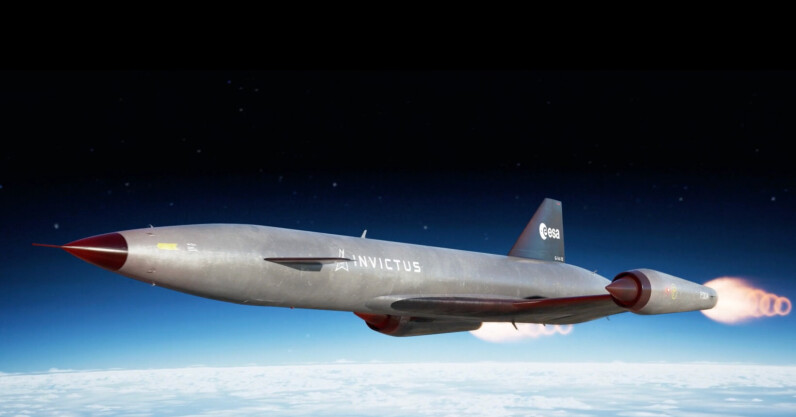
A bankrupt company’s propulsion system for hypersonic planes is being revived by Invictus, a new European Space Agency (ESA)-backed project aiming to build and fly a hydrogen-powered spaceplane by 2031. The proposed engine for the plane is based on so-called pre-cooler technology, developed over decades by UK aerospace firm Reaction Engines, which went bust in November. Many of Reaction Engines’ top engineers found a new home at British aerospace and defence company Frazer-Nash Consultancy, which is now leading the Invictus consortium. Other members of the group include US aircraft maker Spirit AeroSystems and Britain’s Cranfield University. Invictus aims to develop…
This story continues at The Next Web
How WeTransfer reignited fears about training AI on user data

Dutch file-sharing service WeTransfer is under fire after users spotted sweeping updates to its terms of service that appeared to let the company train AI models on their uploaded files. The company has now removed the controversial language, but users remain outraged. Here’s what’s going on — and why it matters. What did WeTransfer change? WeTransfer users discovered this week that the service had updated its policy with a clause granting it a perpetual, royalty‑free license to use user‑uploaded content, including for “improving machine learning models that enhance content moderation.” The changes were due to come into effect on August…
This story continues at The Next Web
This cargo ship is turning its CO2 emissions into green cement
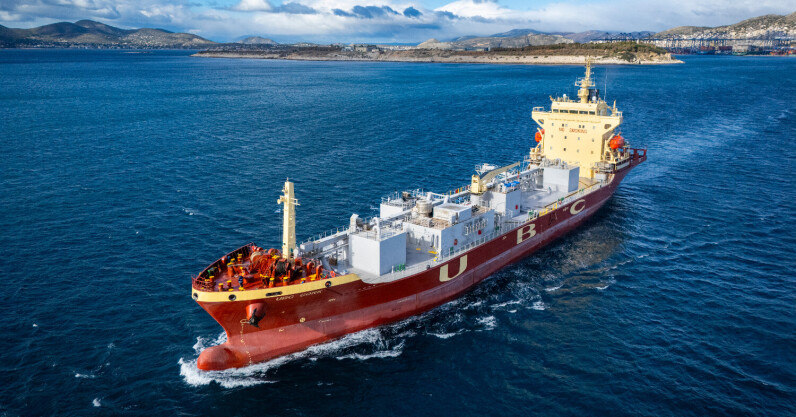
A giant cargo ship is set to trap carbon from its exhaust and turn it into cement for use in onshore construction. The technology, developed by UK startup Seabound, is billed as the world’s first commercial carbon capture system for boats. It will be installed on the UBC Cork, a cement carrier owned by Germany’s Hartmann Group. “These are the systems we intend to scale across hundreds, and eventually thousands, of vessels,” Alisha Frediksson, Seabound’s CEO and co-founder, told TNW. “We’re therefore very excited to get them out into the world — to gather valuable data, optimise future iterations, and…
This story continues at The Next Web
Why I want the EU to pause the AI Act — as a climate advocate

“There is no stop the clock. There is no grace period. There is no pause.” So said Thomas Regnier, a spokesman for the European Commission, in response to calls for a pause on the EU’s AI Act. These landmark rules on artificial intelligence will, then, be rolled out according to the timeline specified in the legislation. The EC will ignore calls from 46 CEOs across the continent to halt the legislation for two years — including me. This will surprise some people. My company, Kayrros, was the world’s first to track and attribute methane globally. We were cited when John…
This story continues at The Next Web