Reading List
The most recent articles from a list of feeds I subscribe to.
Spotify’s AI songs from dead artists spark fresh outrage over exploitation

Spotify has been hit with another AI controversy after publishing computer-generated songs under the names of dead musicians. An investigation by 404 Media found that Spotify is releasing AI-generated songs on the pages of deceased artists — without approval from their estates or labels. One such track, “Together,” recently appeared on the official page of Blake Foley, a country singer who was murdered in 1989. The song sounds vaguely similar to Foley’s style, but the accompanying image features a blonde, young man who looks nothing like him. 404 Media linked the track to a company account called Syntax Error, which…
This story continues at The Next Web
Or just read more coverage about: Spotify
Why navigating ongoing uncertainty requires living in the now, near, and next

As we move into the second half of 2025, the global tech ecosystem is navigating a heady mix of unpredictability and promise. Funding into newer tech firms remains complex, with Startup Genome reporting that while the Beijing, Los Angeles and Tokyo startup landscapes are seeing YoY growth, Paris is flat and the rest of the European ecosystem is in decline. Meanwhile, the technology landscape continues to evolve at an accelerating pace. As Deloitte’s 2025 Tech Trends report states: “technology optimisation and transformation have never been more important as innovation continues to fuel innovation.” This is creating a landscape where large…
This story continues at The Next Web
Funding focus: Germany snaps up 90% of Europe’s record defence tech funding

Funding focus is a new series analysing cash flow into the European tech ecosystem. Last week, we looked at the largest investment rounds in fusion energy this year, and now we’re honing in on Europe’s booming defence tech arena. Europe’s defence tech startups secured $971mn in funding in the first half of this year, as VCs look to capitalise on the continent’s push to rearm amid heightened geopolitical tensions. Funding in H1 2025 has already shot past the whole of 2024 — the previous record year — which saw defence startups raise $605mn, according to Dealroom data. German startups led the…
This story continues at The Next Web
Britain just launched its top supercomputer. Here’s how it ranks globally
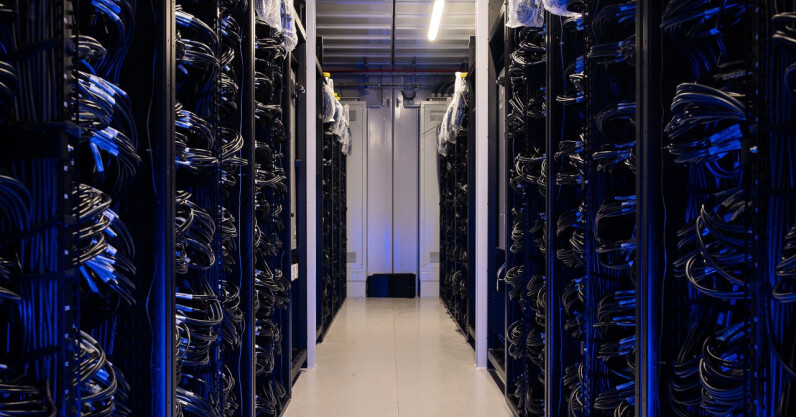
The UK has just launched its most advanced supercomputer — the 11th most powerful in the world. Isambard-AI, hosted at the University of Bristol, officially went live this week. The machine was built by Hewlett-Packard Enterprises (HPE) using its Cray EX architecture and fitted with over 5400 NVIDIA Grace Hopper superchips. Its raw computing power is measured at 216.5 petaflops, with a peak theoretical performance of 278.6 petaflops. For the uninitiated, one petaflop is equal to 1 quadrillion (1,000,000,000,000,000) calculations per second. The system is more than 10x faster than the UK’s next-fastest supercomputer — the Njoerd supercluster in London.…
This story continues at The Next Web
Denmark taps Microsoft to build world’s most powerful quantum computer
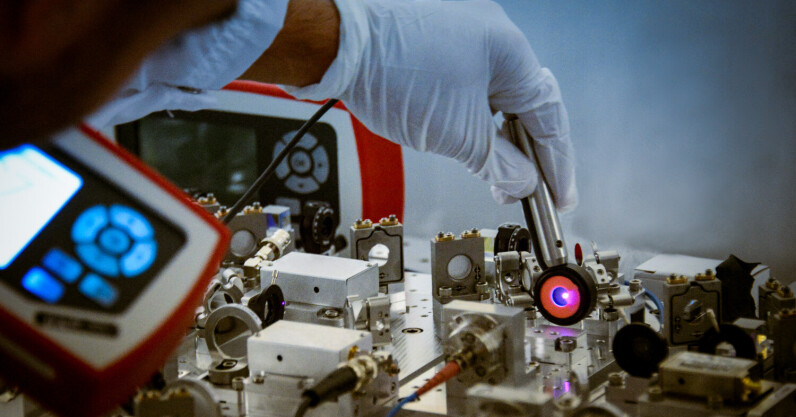
Denmark is aiming to stake a bold claim in the global quantum race with plans to build the world’s most powerful quantum computer. Backed by €80mn from EIFO (Denmark’s export and investment fund) and the Novo Nordisk Foundation, the new initiative — dubbed QuNorth — aims to deploy the Nordic region’s first “Level 2” quantum system. Microsoft and California-based Atom Computing will deliver the system, named Magne, after the mythological son of Thor. Microsoft will contribute its Azure Quantum software stack. Atom will provide hardware based on its “neutral atom” design. Magne is expected to include around 50 logical qubits…
This story continues at The Next Web
Or just read more coverage about: Microsoft