Reading List
The most recent articles from a list of feeds I subscribe to.
LG Electronics and Nvidia are in talks on robotics, AI data centres, and mobility
The discussions, triggered by a visit from Nvidia’s Madison Huang, would deepen LG’s physical AI ambitions and give Nvidia another major consumer electronics partner at a moment when physical AI is moving from lab to factory floor. LG Electronics confirmed on Wednesday that it has been in discussions with Nvidia over potential cooperation in three […]
This story continues at The Next Web
China threatens the EU with broad retaliation if Huawei and ZTE are banned from European networks

Beijing’s commerce ministry has formally submitted a 30-page document warning the European Commission that its draft Cybersecurity Act, which would make vendor removal mandatory for the first time, could trigger reciprocal measures against European companies in China. China has formally threatened the European Union with retaliation if a sweeping new cybersecurity law leads to the […]
This story continues at The Next Web
mbiomics raises €30M Series A to take its microbiome cancer co-therapy into clinical trials

The Munich techbio company is developing a live bacterial product designed to enhance immune checkpoint inhibitor response in advanced melanoma, with a Phase 1B study planned for 2027 mbiomics GmbH, a Munich-based techbio company developing microbiome-based therapeutics, has completed the third and final closing of its Series A funding round, bringing the total raised to […]
This story continues at The Next Web
AI recruiting startup Dex raises $5.3m seed to match AI engineers with the companies that need them most

Founded by a former Atomico talent adviser, Dex charges employers agency fees only on successful hires, and has gone from zero to $1.8 million ARR in under six months of charging. Paddy Lambros spent two and a half years advising roughly 100 European startups on hiring at Atomico, one of Europe’s largest venture capital firms. […]
This story continues at The Next Web
GM brings Google Gemini to four million vehicles in one of the largest in-car AI deployments yet
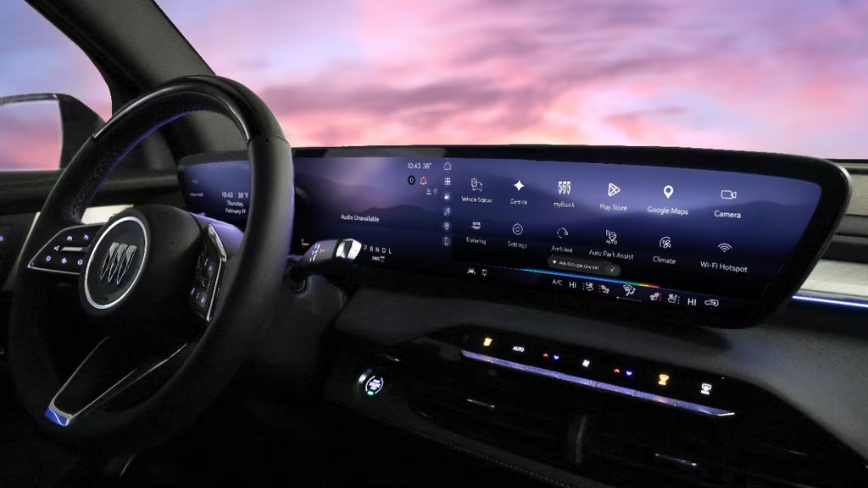
The over-the-air update replaces Google Assistant across model year 2022 and newer Cadillac, Chevrolet, Buick, and GMC vehicles, but arrives under the shadow of GM’s data-sharing controversy and a looming FTC consent order. General Motors has announced that Google Gemini is rolling out to approximately four million vehicles in the United States, in what the […]
This story continues at The Next Web